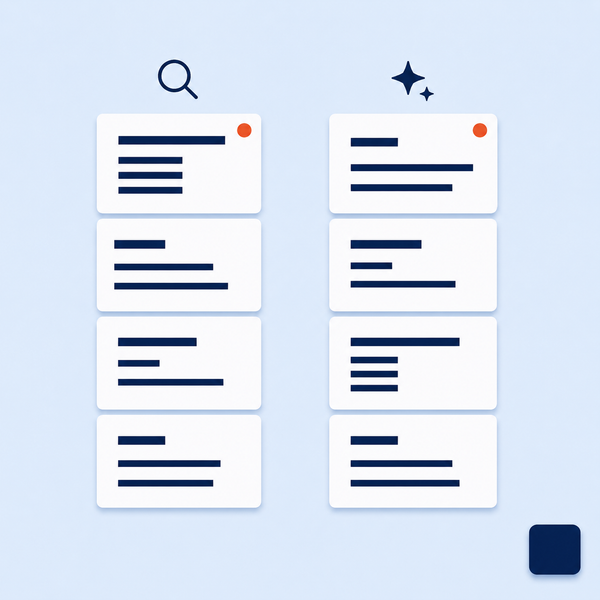
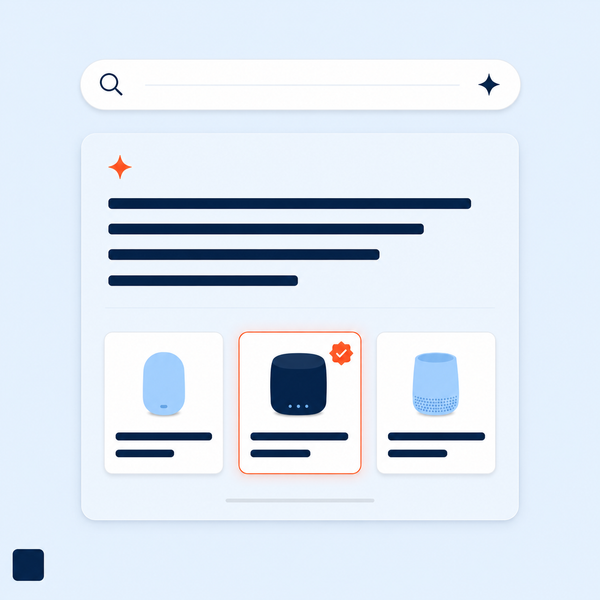
AI did not kill Google Search. It changed how people find you.
Google just reported the biggest quarter in its history, and buried in the numbers is a message every brand owner should read. For two years the story has been that AI would gut Google Search, end the click and take the advertising business down with it. The latest results tell a different story. Search advertising is still growing, but the way people discover brands through Google is changing. So let me walk through what happened, why it matters for your store, and what to do about it.
What happened
In its most recent quarter, Alphabet, Google's parent company, reported revenue of 119.8 billion dollars, up 24% on the same quarter a year earlier. The number that should matter to you sits inside that. Google Search and other advertising revenue, the category Alphabet reports, was 63.3 billion dollars, up 17% year over year, while AI Overviews and AI Mode kept rolling out across Search. AI Overviews is the AI-written answer box that now sits at the top of a lot of Google results. AI Mode is the fuller version, a back-and-forth conversation with the search engine instead of a page of links. Both have been expanding across Search, and advertising revenue still grew at 17%.
One honest note before we go further, because you will see the headline everywhere. Alphabet reported 112.1 billion dollars in net income, but most of that came from unrealised gains in its investment portfolio rather than its day-to-day operations. Operating income, which gives a clearer view of the underlying business, rose 30% to 40.8 billion dollars. Still an exceptional quarter, but the eye-watering profit figure was not all generated by advertising.
What it means for your search traffic
The fear was that AI answers would stop people clicking, fewer clicks would mean fewer ads sold, and Google's advertising business would weaken. That has not happened. Google Search and other advertising revenue grew 17%, which shows Google has continued to monetise search while expanding its AI features.
That does not mean nothing has changed. When Google answers a question at the top of the page, some people no longer need to visit another website. That matters most for organic search, the unpaid results you earn by ranking well, where an informational query that once produced a visit may now be resolved on Google itself.
So the click did not die. It just became harder to earn. Paid search stays commercially valuable to Google, so it is not about to get cheaper for you, while brands may have fewer chances to attract an organic visit from certain searches. Most brands are paying attention to the rising cost of advertising. Fewer are considering what happens when Google satisfies the customer before they ever reach the website.
What to do about it
Three moves, and they work together.
First, assume paid search is here to stay, and make it earn its keep. If Google's ad revenue is growing, paid traffic is not going away and it is not getting cheaper. The lever you control is not the price of the click, it is what happens after it. Sending a paid click to your homepage, or to a page that does not match the ad that earned it, wastes a slice of every dollar you spend. Send it to a page built for that specific ad, and fix the conversion rate behind the click, the share of visitors who buy, before you go hunting for cheaper traffic. That is where the margin is. Improving what happens after the click is often more achievable than trying to force down what Google charges for it.
Second, become the brand the AI names. If more answers are being given inside Google's AI results, you want your brand to be one of the sources those results can confidently draw from. There is no guaranteed formula for earning that visibility, but the fundamentals matter: product pages that answer real buyer questions, credible reviews, original expertise, accurate information, and structured data, the behind-the-scenes labels that help a search engine understand what is on the page. The brands that get named in the answer are the ones that made themselves easy to understand and hard to ignore.
Third, own the audience so you depend on neither. Paid and organic search are both rented ground. You perform on someone else's platform, by someone else's rules, and the terms change without your agreement. The channels you control most are your email list, your SMS list, and your existing customer base. They still carry costs, but no search platform can remove your access to that audience simply by changing how its results are displayed. Every shift in search over the last two years points the same way, so the brands that win are the ones building a direct relationship the platform cannot touch.
Google's record quarter is not only a story about Google. It is a signal that search remains commercially powerful, even as AI changes how people use it. Paid traffic is not getting cheaper. Some organic clicks are becoming harder to earn. And the direct customer relationships you build are becoming more important. Plan for all three.
A few EcomIQ pieces go deeper on the moves above. Your homepage is quietly wasting your ad budget is on making paid clicks convert once you have paid for them. You paid for the customer, Amazon kept them covers why owning the relationship beats renting the audience. And the five numbers you should know cold is on knowing whether your paid traffic is actually turning a profit.
Get EcomIQ's latest advice, teardowns and practical tactics by email before they are published elsewhere. Written for direct-to-consumer founders who want clearer decisions, stronger marketing and more profitable growth.